Removing Leaves Doesn’t Focus “Plant Goodness” In The Fruit
A Common Misconception Among Novice Gardeners Is That Removing Leaves Somehow Concentrates “Plant Goodness” or Energy Into The Fruit. This Belief Often Leads To The Practice Of Stripping Leaves From Plants, Which Can Be Detrimental To Their Health And Productivity.
Table of Contents
To understand why this is incorrect, we need to delve into the fundamental processes of plant growth and better understand “Plant Goodness”
Biochemical Factories Of Plant Goodness!
Plants are incredible biochemical factories, constantly converting sunlight, water, and nutrients into the building blocks of life. This process begins in the roots, where tiny hair-like structures absorb water and minerals from the soil. These essential substances are then transported upwards through the plant’s vascular system to the leaves.
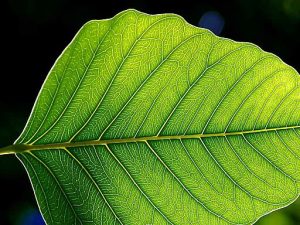
In the leaves, a miraculous process called photosynthesis occurs. Using chlorophyll, sunlight is harnessed to convert carbon dioxide from the air into sugars. These sugars, along with the minerals from the soil, are the plant’s primary source of energy. This newly created energy is then distributed throughout the plant to fuel growth, repair, and reproduction.
Active NOT Passive Leaves
Contrary to the popular belief, leaves are not merely passive recipients of nutrients. They are active participants in the plant’s life cycle. They produce vital hormones that regulate growth and development. Moreover, leaves are the primary organs responsible for transpiration, a process that pulls water up from the roots. This upward movement of water also carries dissolved minerals to all parts of the plant.
Therefore, removing leaves deprives the plant of essential functions. It disrupts the delicate balance of photosynthesis, hormone production, and water transport. This can lead to reduced growth, fewer flowers, and smaller, less flavourful fruit.
Let’s not forget, the “goodness” of a plant is not concentrated in any particular part. It is a dynamic system where every component—roots, stems, leaves, flowers, and fruit—play a crucial role. To produce healthy crops with good yields AND flavour we need to bear all this in mind and avoid practices that can harm our plants.
By nurturing the entire plant, including its leaves, we create optimal conditions for healthy growth and abundant harvests.
Related Content:
Photosynthesis: The process by which plants convert light energy into chemical energy.
Transpiration: The process by which plants lose water through their leaves.
Plant hormones: Chemical messengers that regulate plant growth and development.
Reference Sources:
Biology: The Unity and Diversity of Life by Reece, Urry, Cain, Wasserman, Minorsky, and Jackson